
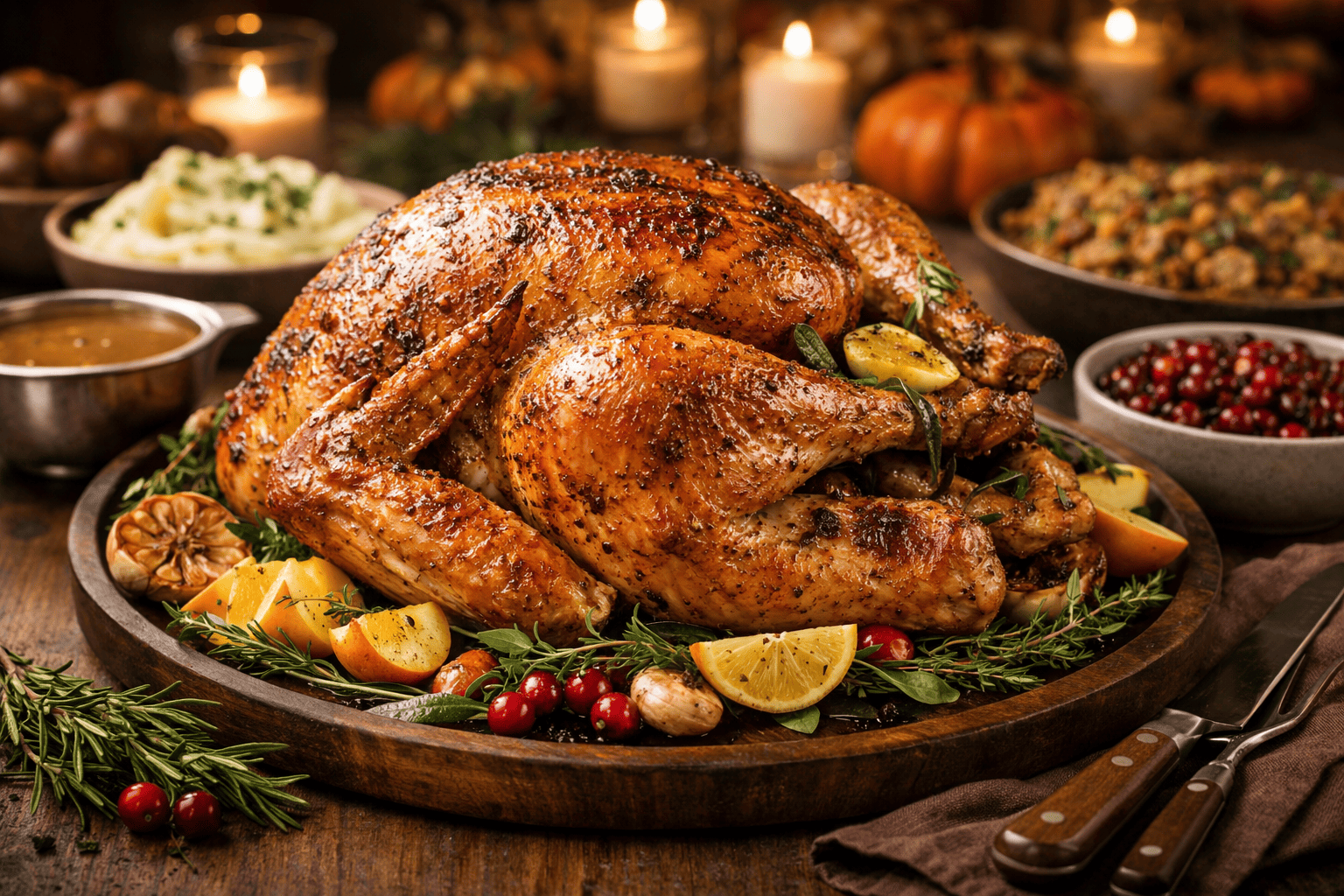
Best Roast Turkey Recipe
Roasting a whole turkey can feel intimidating, especially if you’re aiming for that perfect balance of juicy meat and crispy, golden skin. But the truth is, cooking a turkey doesn’t require complicated techniques—it requires understanding a few key fundamentals and if you want more expert guidance, check out our complete collection of cookbooks and recipe guides on shopbookly.com
A well-cooked turkey is all about preparation, seasoning, temperature control, and patience. From letting the bird rest before cooking to using herb butter under the skin, every step contributes to the final result.
Whether you’re preparing a turkey for a holiday feast or simply trying it for the first time, this complete guide will walk you through everything you need to know—from thawing and seasoning to roasting and carving.
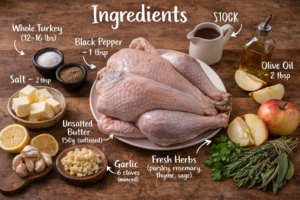
🧾 Ingredients
- Whole turkey (12–16 lbs)
- Salt – 2 tbsp
- Black pepper – 1 tbsp
- Unsalted butter – 150g (softened)
- Olive oil – 2 tbsp
- Garlic – 6 cloves (minced)
- Lemon – 1 (juice & zest)
- Onion – 1 large (quartered)
- Apple – 1 (quartered)
- Fresh herbs (parsley, rosemary, thyme, sage)
🧊 How to Properly Thaw a Turkey
If your turkey is frozen, proper thawing is essential for safe and even cooking.
The safest method is to thaw it in the refrigerator. Allow approximately 24 hours for every 4–5 pounds of turkey. For example, a 12–16 lb turkey will take about 3–4 days to fully thaw.
Avoid thawing at room temperature, as this can lead to bacterial growth. If you’re short on time, you can use the cold water method—submerge the turkey in cold water and change the water every 30 minutes.
🛠️ Essential Tools You Need
Having the right tools makes a huge difference:
- Roasting pan with rack (ensures even airflow)
- Meat thermometer (critical for doneness)
- Basting brush or spoon
- Aluminum foil
- Sharp carving knife
These tools help you maintain control over the cooking process and ensure consistent results.
🧠 Why This Recipe Works (Cooking Science)
Understanding the science behind cooking turkey helps you avoid mistakes and improve results.
- Salt enhances natural flavors and helps retain moisture
- Butter under the skin acts as a self-basting layer
- High heat at the start creates crispy skin
- Lower heat afterward cooks the meat evenly
Resting the turkey after roasting allows juices to redistribute, preventing them from spilling out during carving.
🧈 Herb Butter (Flavor Core)
In a bowl, mix:
- Softened butter
- Olive oil
- Garlic
- Lemon juice & zest
- Fresh herbs
Gently loosen the skin of the turkey and spread the butter underneath and over the surface.
This step is crucial because it ensures that flavor penetrates beyond the surface and keeps the meat moist during roasting.
🧄 Aromatics / Stuffing
Stuff the cavity with:
- Onion
- Apple
- Garlic
- Lemon
- Herbs
These ingredients release steam and flavor from inside the turkey, enhancing both moisture and aroma.
🔥 How to Cook the Turkey (Step-by-Step Guide)
Step 1: Bring to Room Temperature
Remove the turkey from the refrigerator 30–45 minutes before cooking. This helps it cook more evenly.
Step 2: Preheat Oven
Preheat your oven to 220°C (430°F).
Step 3: Prepare the Turkey
Pat the turkey dry with paper towels. This is essential for achieving crispy skin.
Season generously inside and outside, then apply herb butter.
Step 4: Initial High Heat Roast
Place the turkey on a roasting rack and roast for 20–30 minutes at high temperature.
This step helps develop a golden, crispy skin.
Step 5: Reduce Temperature
Lower the oven temperature to 180°C (350°F) and continue cooking.
Step 6: Cooking Time Guide
Roast the turkey for approximately 13–15 minutes per pound.
| Turkey Size | Cooking Time |
|---|---|
| 12 lbs | 2.5–3 hrs |
| 14 lbs | 3–3.5 hrs |
| 16 lbs | 3.5–4 hrs |
Step 7: Basting
Baste the turkey every 30–40 minutes using its own juices or melted butter.
Step 8: Prevent Over-Browning
If the skin becomes too dark, loosely cover the turkey with foil.
🌡️ How to Check Doneness
Use a meat thermometer to check the thickest part of the thigh.
- Safe internal temperature: 75°C / 165°F
Make sure the thermometer does not touch the bone for accurate readings.
⏳ Resting the Turkey
Once cooked, remove the turkey from the oven and let it rest for 20–30 minutes.
This allows the juices to redistribute, ensuring moist and tender meat.
🔪 How to Carve a Turkey
Carving properly improves presentation and texture:
- Remove legs and thighs
- Separate wings
- Slice breast meat against the grain
Serve immediately for best results.
⚠️ Common Mistakes to Avoid
Avoid these mistakes to ensure success:
- Overcooking the turkey
- Not using a thermometer
- Skipping resting time
- Not drying the skin before cooking
- Cooking at one constant high temperature
🔄 Turkey Recipe Variations
Brined Turkey
Soaking the turkey in a saltwater solution for 12–24 hours helps it retain moisture and enhances flavor.
Dry Brine Method
Rub salt directly onto the turkey and refrigerate for 24 hours. This improves flavor without adding extra moisture.
Spatchcock Turkey
Removing the backbone and flattening the turkey allows for faster and more even cooking.
Herb Variations
Experiment with different flavor combinations:
- Garlic + rosemary
- Lemon + thyme
- Sage + butter
🍽️ What to Serve with Roast Turkey
Pair your turkey with classic side dishes:
- Mashed potatoes
- Gravy
- Cranberry sauce
- Roasted vegetables
- Stuffing
These sides complement the richness of the turkey and create a balanced meal.
🧊 Storage & Reheating
Store leftover turkey properly:
- Refrigerate for up to 4 days
- Freeze for up to 2 months
To reheat:
- Use 160°C (320°F) oven
- Add broth to maintain moisture
⏱️ Complete Cooking Timeline
Plan your cooking process efficiently:
- 3–4 days before: thaw turkey
- 1 day before: season or brine
- 1 hour before: bring to room temperature
- Cooking: follow time guidelines
- Resting: 20–30 minutes
🧠 Advanced Tips for Perfect Turkey
- Season 24 hours in advance for deeper flavor
- Always pat turkey dry before roasting
- Use a rack for even heat circulation
- Avoid opening the oven frequently
- Let temperature guide you, not just time
For more cooking techniques, check out this complete cooking tips guide.
❓ Frequently Asked Questions
How long should I cook turkey per pound?
13–15 minutes per pound at 180°C (350°F).
Should I cover the turkey with foil?
Only if the skin browns too quickly.
How do I keep turkey juicy?
Use butter under the skin, avoid overcooking, and let it rest.
What temperature is fully cooked?
75°C / 165°F.
Can I prepare turkey in advance?
Yes, seasoning or brining can be done 24 hours ahead.
Is basting necessary?
Not required, but it helps enhance flavor.
What is the best turkey size?
12–16 lbs is ideal for most households.
Can I cook turkey without butter?
Yes, olive oil or other fats can be used.
Why is my turkey dry?
Usually due to overcooking or skipping resting time.
Should I stuff the turkey?
You can, but loose stuffing or aromatics are safer for even cooking.
🏆 Final Thoughts
A perfect roast turkey doesn’t rely on complicated methods—it relies on consistency and understanding. When you control temperature, use proper seasoning, and allow the meat to rest, you naturally achieve better results.
Once you master this method, you’ll be able to cook a turkey that is juicy, flavorful, and impressive every single time.
Leave a Reply