
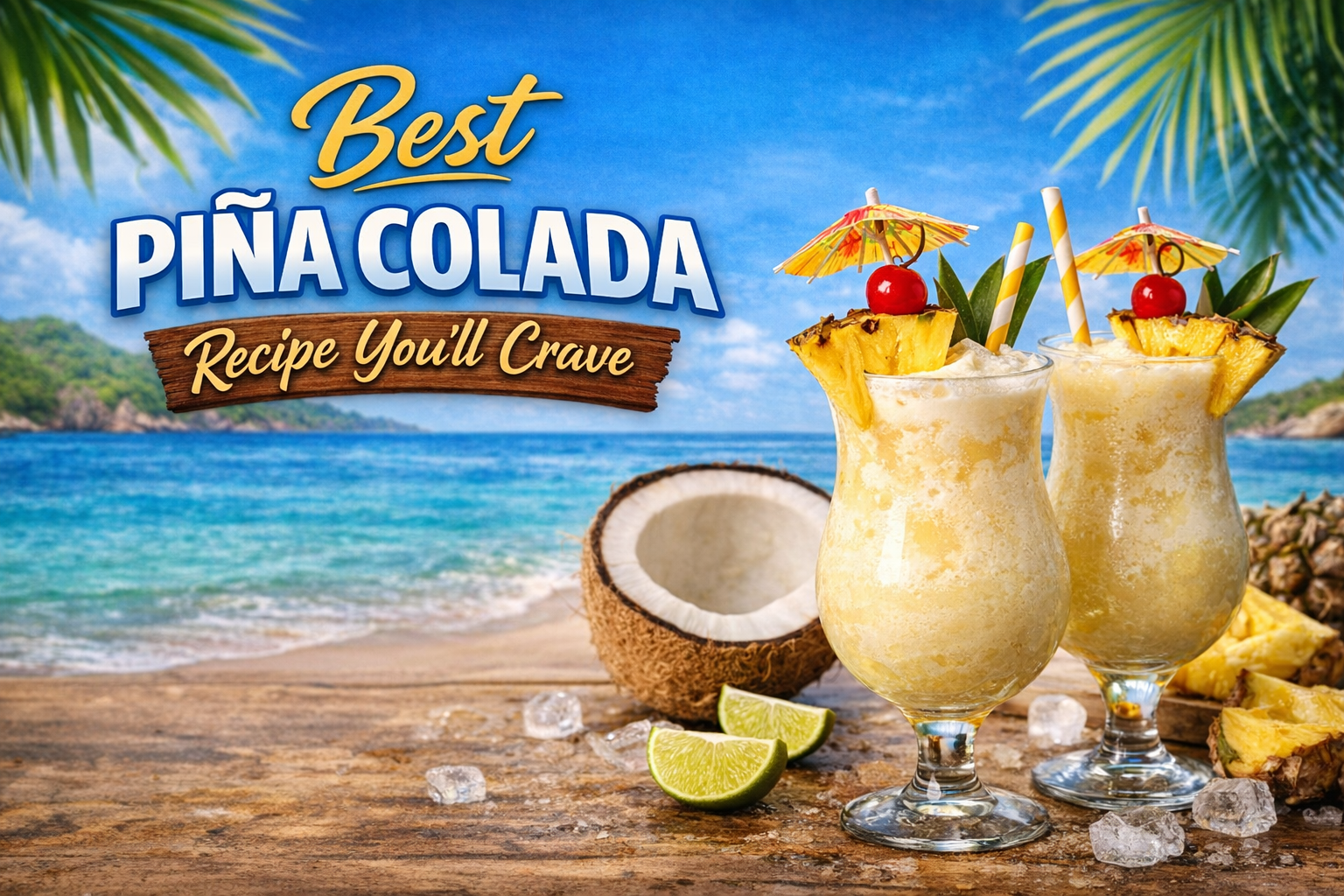
Ultimate Piña Colada Recipe at Home
Introduction
Beginning with Piña Colada intuition, I usually focus on the achievement of both sweetness and acidity first, and then the rum or coconut cream, since fresh ingredients transform everything, although in practice daily nowadays pineapple juice comes in cans.
Others maintain that the mixed path is the hallmark of a tropical coconut cream, but I have observed the shaken constructions in an iced glass provide more light and clean taste, with ice control and a quick pour of black rum redefining the anticipations nowadays.
I would rather use high-speed bursts of the blender to achieve a smooth and creamy texture, and then add more simple syrup, a splash of lime juice, and occasionally fresh pineappl
e to give it a thick consistency, with a garnish, such as cherry, at home. If you’re exploring healthier food choices, check out our zero point food list for smart ingredient ideas.
✔ Link to:
👉 Zero Point Food List
What Is A Pina Colada
To me, a pina colada does not start with reminiscence but with the texture where a blender collides with crushed ice and unexpected ingredients such as coco lopez, coconut syrup, and vanilla extract rebrand the tropical identity associated with the drink as of today.
I tend to add lime juice, another splash of simple syrup, or even a pinch of salt followed by a balancing of mint leaves, cinnamon, and nutmeg, and has shown that a pina colada does not require fruit but rather constructs flavor through layers, a deliberate process.
Start with the end: in a high speed blender combine vanilla ice cream, mango juice and fresh mango then blend at high speed till it is completely blended then taste and add or subtract sweetness then pour into a chilled glass, garnish with pineapple wedge and cherry.
Ingredients
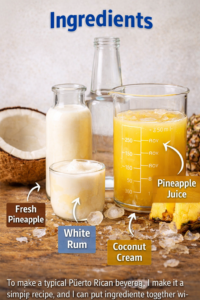
The development of the piina colada starts with the tropical cocktail feeling that prefers rum, coconut cream, and pineapple juice which mixes with ice until creamy smooth taste characterizes summer beverage, which is equally refreshing, sweet and deep satisfying rich flavor.
I got to know about balance, the sweetness should be counterbalanced by acidity, and decisions on frozen or shaken should be made without relying on store-bought mixes and pursuing the authentic taste with pineapple juice, good coconut cream, fresh ingredients, and luscious texture with crushed ice.
To make a typical Puerto Rican beverage, I make it a simple recipe, and I can put ingredients together within minutes to serve at pool parties letting the flavor be driven to the tropics in a balance that is overly sweet and home-cooked.
How To Make Pina Colada
Begin with an opposition point: rather than pursuing iconic sweetness, maintain the balance with fresh pineapple, coconut flavor, white rum. Pursue good blending in a blender to maximize the texture to achieve an ultra-tropical character, less cloying expression and a notably creamy texture immediately prior to serving.
Start with the glassware: pour into a tall glass or a hurricane glass and only then add body to it using frozen pineapple to produce a thicker texture. Make it sweeter, add more brightness, use a better quality of rum, keep it in balance or make a lighter one adding less coconut cream at home.
Switching techniques, a frozen version is slushy, whereas a shaken one is mixed, strained, and smoother, but less thick, common so as to create a sense of a dessert. Traditionally, one uses coco lópez, suggested, serve fresh, or in the freezer, only a little, serve now, cold, now, now, now in a fresh state.
Tips & Variations
- I tend to begin with what the majority of people disregard the finish as it is not about the sweetness as much but about how you manage balanced ingredients so that the slightest change could turn the drink into a different one.
- In case I wish to go on a light side, I tilt towards a non-alcoholic twist and just skip rum, but in situations where I need a richer flavor, I combine classic types that offer a clean taste.
- I lay emphasis on adding nuanced richness and depth via a clever blend of accumulating quiet complexity and not dominating the profile.
- Its provenance in Puerto Rico made me reconsider presentation, thus I do not leave out a wedge of pineapple, a maraschino cherry or even a small umbrella, since these are the indicators that people pay as much attention to perception as they do to taste.
- Fruits always bring out more flavor when fresh, but texture reigns, and I make changes by adding more ice or sometimes a body to the drink.
- I must always remember that you can change ingredients without losing authenticity, provided that the main balance remains.
- In the case of brief sessions, I use the minimum of ingredients with fast preparation, particularly when I am taking them through something that is easy to follow.
- However, when it comes to the point, I go back to the classic proportions and the traditional preparation in which there is always the simple ingredient list that never overcomplicates the basic profile.
Frozen Vs Shaken Piña Colada (Quick Comparison Guide)
| Feature | ❄️ Frozen Version | 🍸 Shaken Version |
| Mixing Style | Blended with crushed ice | Shaken over ice |
| Texture | Thick, creamy, dense | Light, frothy, airy |
| Consistency Control | Ice defines structure early | Adjusted during shaking |
| Flavor Approach | Ingredients combined upfront | Taste-first, then adjust sweetness |
| Integration | Gradual blending process | Fully incorporated quickly |
| Mouthfeel | Smooth and heavy | Crisp and refreshing |
| Customization | Stable, less flexible mid-process | Easy to tweak balance on the fly |
| Alcohol Flexibility | Works well as non-alcoholic (omit rum) | Typically follows classic mix ratios |
| Best For | Hot weather, dessert-style drinks | Balanced cocktails, bar service |
| Finish | Rich, frozen density | Clean, frothy lift |
Which One Should You Choose?
- Go Frozen if you want a thick, tropical, dessert-like drink
- Choose Shaken if you prefer a lighter, more balanced cocktail experience
Best Rum For Pina Colada
I usually start backwards, choosing rum before thinking about pineapple juice or coconut cream, because structure defines outcome; a light white rum keeps the cocktail clean, while aged tones reshape the entire tropical blend experience.
When testing profiles, I lean into contrast, pairing fresh pineapple juice with richer cream of coconut, letting ice and texture decide balance; sometimes a subtle dark rum float adds depth without overwhelming the smooth finish.
I’ve found the best results come when ingredients like coconut cream, pineapple juice, and rum are treated as equal voices, not hierarchy, adjusting blend intensity or shaken technique to refine a creamy texture that feels intentional.
Check out the shorts video :
FAQ
Can I Make Piña Colada Without Alcohol?
Yes, and honestly, it’s more common than people admit. Skip the rum entirely and focus on pineapple and coconut balance. I often tweak sweetness slightly so the drink still feels complete, not like something is missing.
What Is The Best Coconut Cream To Use?
From experience, thicker coconut cream delivers better texture than lighter versions. Look for options that aren’t overly diluted. A rich base creates that signature creamy body, which defines the drink more than any single ingredient.
Can I Use Fresh Pineapple?
Absolutely, and it usually improves the flavor. Fresh pineapple adds natural acidity and brightness that bottled juice can’t fully replicate. Just make sure it’s ripe, otherwise the drink can turn slightly sharp instead of smooth.
How Do I Make It Thicker?
Thickness comes down to ice control and blending technique. I reduce liquid slightly and increase ice or frozen fruit. A longer blend helps too, but avoid over-blending or you’ll lose that dense, creamy consistency.
Can I Make It Ahead Of Time?
You can, but it’s best fresh. If needed, blend everything and store it briefly in the freezer, then re-blend before serving. The texture separates over time, so a quick reset brings it back to life.
What Type Of Rum Is Best?
Traditionally, white rum is preferred for its clean, subtle profile. However, I sometimes layer a small amount of dark rum for depth. It depends on whether you want a lighter or more complex finish.
Is Piña Colada Very Sweet?
It can be, but it doesn’t have to be. The key is balancing sweetness with acidity. I usually adjust using citrus or reduce added sugar so the drink feels refreshing instead of heavy.
Piña Colada Ingredients?
At its core, it’s simple: pineapple, coconut, and rum. Everything else is optional. Some variations include cream, sweeteners, or fruit blends, but the classic structure always revolves around those three foundational elements.
Jamaican Piña Colada Recipe?
The Jamaican version often leans richer, sometimes using darker rum and deeper coconut notes. It tends to feel slightly bolder, with more emphasis on layered flavor rather than the lighter Puerto Rican-style balance.
Piña Colada Recipe How To Drink?
Serve it cold, always. I prefer a chilled glass with a smooth, creamy texture. Sip slowly rather than rushing—it’s a drink built for gradual enjoyment, not quick consumption like sharper cocktails.
Traditional Piña Colada Recipe?
The traditional version sticks to pineapple juice, coconut cream, and white rum, blended with ice. No unnecessary additions—just a clean, balanced tropical profile that highlights texture as much as flavor.
Piña Colada Recipe In Ml?
A standard ratio I use is 60 ml rum, 90 ml pineapple juice, and 30 ml coconut cream. Adjust slightly depending on taste, but keeping proportions consistent helps maintain balance every time.
Simple Piña Colada Recipe?
Keep it minimal: pineapple juice, coconut cream, and rum blended with ice. No syrups, no extras. When the base ingredients are good, simplicity actually produces a better, cleaner result.
Creamy Piña Colada Recipe?
For extra creaminess, I sometimes add a small amount of cream or reduce ice slightly. The goal is a thicker texture without making it too heavy, keeping that smooth, drinkable consistency intact.
Leave a Reply